You Can Know More and Trust God Less
Secret knowledge can feel like spiritual growth while training us to fear the world. Christian faith frees us to trust the God who sees what we cannot.
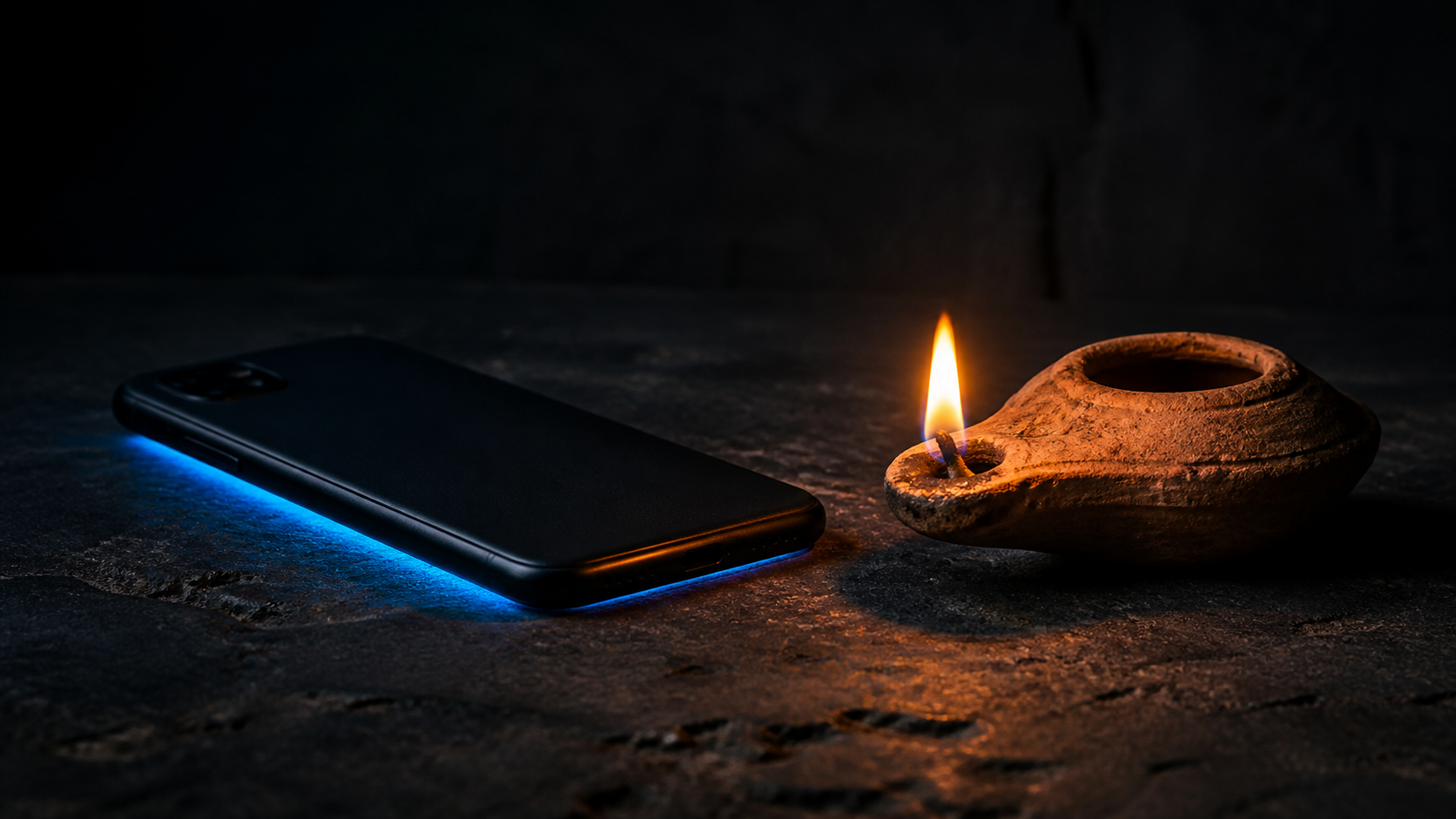
Why secret knowledge can feel like spiritual growth while teaching us to fear the world
“Those videos make me believe more and more.”
A Christian said that to me recently about videos mixing Bible teaching, prophecy, politics, secret agendas and claims about what is really happening in the world.
My first question was, “Believe in what, exactly?” Belief tells us little until we name its object.
Perhaps he was becoming more certain that powerful people conceal the truth, that spiritual forces influence world events or that biblical prophecy fits today’s headlines. Some of those claims may even be true. Scripture has no naive picture of human power or spiritual evil.
But certainty about evil can grow while trust in God shrinks.
A person can finish hours of Christian content more convinced that God exists and less able to rest in him. They know more names, theories and supposed connections. They also become more anxious, suspicious and dependent on the next person who promises to explain what is really going on.
They know more and trust less.
Demons With Correct Theology
James gives us a severe warning about knowledge that never becomes trust:
“You believe that there is one God. Good! Even the demons believe that, and shudder.”
James 2:19
James is confronting a faith that can say the right things without producing obedience. The demons have accurate information about God. They know he exists. They recognize his authority. Their knowledge makes them shudder because they neither love him nor entrust themselves to him.
Christian faith includes truth. Jesus died, rose from the dead and reigns as Lord. A vague religious feeling can’t take the place of those claims.
Yet faith goes further than agreeing that certain statements are correct. Faith takes God at his word. It places the weight of a life upon his character. It learns to obey him when obedience is costly and trust him when the world makes little sense.
Someone may be completely right about a corrupt government and still have very little faith. Someone else may misunderstand half the political forces at work in the world and still trust Christ with remarkable steadiness.
God never commanded us to understand everything. He calls us to trust him.
The Knowledge Faith Seeks
When Moses asked to see God’s glory, God answered by passing before him and proclaiming his name:
“The LORD, the LORD, the compassionate and gracious God, slow to anger, abounding in love and faithfulness.”
Exodus 34:6
God revealed his character.
Moses learned the truth he needed most. The world is governed by a God who is compassionate, gracious, patient, faithful and just. Moses could trust God because he was learning who God is.
That is the knowledge Christian faith seeks.
Careful Bible study is good. Theology, history and biblical languages can help us read Scripture more faithfully. Christianity rests upon real events and makes real claims about the world.
The trouble begins when information promises the feeling of control. We want to know who is behind events, what will happen next and how every new crisis fits into an explanation of history. A theory can make a chaotic world feel manageable.
It can also make us feel important.
Secret knowledge flatters us with the thought that we belong to the small group who can see. Other people are deceived, asleep or blind. We understand the hidden pattern.
That feeling is powerful. It is also spiritually dangerous.
When the Outrage Machine Speaks Christian
There will always be another video.
Another hidden connection. Another prophetic timetable. Another political enemy. Another urgent warning about something “they” do not want us to know.
Online platforms reward whatever keeps us watching. Fear works. Anger works. Suspicion works. Peace is bad for watch time.
Adding Bible verses doesn’t make that process healthy.
A video can speak about God while training us to live in constant alarm. It can affirm that Christ reigns while conditioning us to behave as though the powers of darkness are always one step away from victory. It can contain some truth and still form us badly.
Our attention is never passive. What we watch repeatedly teaches us what to notice, whom to fear and where to look for safety.
Eventually, we may know an enormous amount about everything we think Satan is doing while knowing very little more about Christ.
Look at the Fruit
Jesus said a tree is known by its fruit. He wasn’t speaking about online media, but his test gives us a sane way to examine what repeated attention is producing.
What happens after you turn off the screen?
Do you want to pray? Do you want to read Scripture carefully? Are you more patient with people who disagree with you? Are you more confident in the goodness of God? Has your love for Christ grown?
Or do you need another video?
Perhaps you are angrier, more suspicious and less able to enjoy the ordinary gifts of God. You may find yourself treating anyone who questions your theory as blind or compromised. Political enemies occupy your thoughts more than Jesus does. Every news story becomes another sign that catastrophe is closing in.
The fruit can’t prove whether a particular claim is true. It can expose what a steady diet of that content is doing to you.
Some truth is disturbing. Christian maturity doesn’t require emotional numbness or cheerful ignorance. Evil is real. Governments can lie. Powerful people can conspire. Christians should have enough wisdom to recognize corruption and enough courage to oppose it.
But permanent suspicion is not discernment. Compulsive fear is not watchfulness. Contempt for the deceived is not spiritual maturity.
The Spirit produces love, joy, peace, patience, kindness, goodness, faithfulness, gentleness and self-control. We should be concerned when something advertised as Christian formation repeatedly produces the opposite.
You Are Allowed Not to Know
“The secret things belong to the LORD our God,” Moses told Israel, “but the things revealed belong to us” (Deuteronomy 29:29).
In context, Moses is calling Israel to obey what God has revealed. They are responsible for faithfulness, not speculation about everything God has withheld.
That boundary is a gift.
There may be conspiracies we never discover. We may misunderstand the importance of a war, an election or an economic crisis. Some powerful people will escape earthly justice. Events may unfold in ways no commentator predicted.
None of this places Christ in danger.
Christian peace rests upon the character of the God who sees what we cannot see. He knows every hidden act. He understands every political movement and spiritual power. Nothing surprises him. Nothing threatens his throne.
We are free to say:
I don’t know what is happening behind every closed door.
I don’t know what will happen next.
I may be wrong about much of what I think I understand.
But God is good.
Christ has died.
Christ is risen.
Christ reigns.
I belong to him.
That confession gives us a fixed point inside a world we cannot explain.
You can turn off the screen. Christ is still risen.