New Creation, Not Finished Creation
How 2 Corinthians 5:17 can call Christians new while transformation and resurrection still lie ahead.
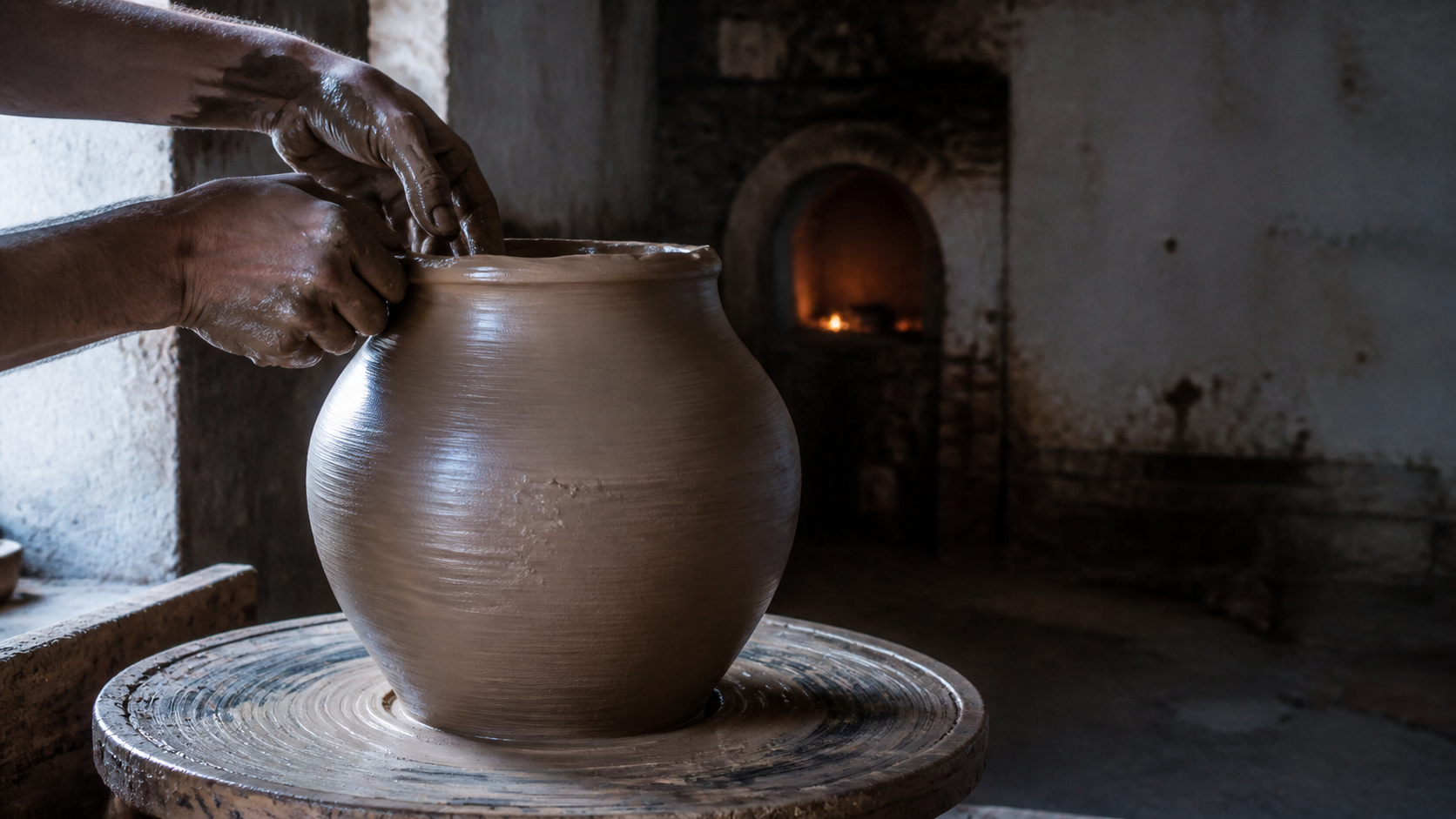
What Paul Means in 2 Corinthians 5:17
“Therefore, if anyone is in Christ, he is a new creation. The old has passed away. Behold, the new has come.”
2 Corinthians 5:17
In an earlier article, I argued that Adam was the beginning of humanity, not its finished form. Second Corinthians 5:17 approaches the same truth from the believer’s present experience. We are new in Christ, yet resurrection and full conformity to him remain ahead.
That verse can make an unfinished Christian feel like a contradiction.
Paul says we are new creations, yet old desires remain stubbornly familiar. We still sin, suffer, misjudge people and carry bodies that are moving toward death. If the new has come, why does so much of the old remain?
Paul gives us a strong answer. New creation has truly begun in everyone who is in Christ. Its completion still lies ahead in the resurrection.
Conversion is real creation, not a change of religious label. Yet the person who rises with an imperishable body will be the finished work. Until then, the Spirit is forming Christ in people who are genuinely new and painfully incomplete.
Paul’s Compressed Greek
Paul writes:
ὥστε εἴ τις ἐν Χριστῷ, καινὴ κτίσις
hōste ei tis en Christō, kainē ktisis
Word for word, the sentence is abrupt:
“So then, if anyone in Christ, new creation.”
Neither clause contains a written form of the verb “to be.” Greek can leave that verb unstated when the reader can easily supply it. The familiar translation, “If anyone is in Christ, he is a new creation,” is grammatically natural.
Some translations widen the phrase: “If anyone is in Christ, there is a new creation.” The NIV goes further and says, “the new creation has come.” Those renderings bring out the larger setting of Paul’s claim. The person in Christ has been made new, and that person’s new life belongs to something larger that God has begun through Jesus.
The grammar can bear more than one shade of emphasis, so the surrounding argument has to lead us.
Paul continues in the shorter reading used by modern critical editions:
τὰ ἀρχαῖα παρῆλθεν, ἰδοὺ γέγονεν καινά
“The old things have passed away. Look, new things have come into being.”
Many readers will know the longer reading preserved in translations such as the KJV and NKJV:
τὰ ἀρχαῖα παρῆλθεν, ἰδοὺ γέγονεν καινὰ τὰ πάντα
“The old things have passed away. Look, all things have become new.”
The longer reading adds τὰ πάντα, “all things,” at the end of the sentence.[1] The shorter reading says that “new things” have come into being. Even if Paul did write “all things have become new”, it doesn’t require us to believe that every part of Christian experience has already reached perfection. Paul’s own context confirms that.
Death, Resurrection and a New Way to See
The verse begins with “therefore.” It reaches back to Christ’s death and resurrection:
“He died for all, that those who live might no longer live for themselves but for him who for their sake died and was raised.”
2 Corinthians 5:15
Christ’s death has brought self-ruled life under judgment. His resurrection has opened a new human life directed toward him. Paul now sees people differently, which is why he says, “From now on, therefore, we regard no one according to the flesh” (2 Corinthians 5:16).
“According to the flesh” describes a way of judging shaped by the present age. Status, appearance, ancestry, influence and worldly success lose their old authority. Christ’s death and resurrection have changed the basis on which Paul understands human beings.
Then comes his conclusion:
“If anyone is in Christ: new creation!”
Paul locates this life “in Christ.” The believer’s story has been joined to his. Christ died, and those who belong to him died with him. Christ was raised, and his risen life has become the source and future of their lives.
This is why Christian identity can’t be reduced to self-improvement. God has joined the believer to his Son. A new allegiance, a new standing before God and a new direction of life flow from that union.
New Already, Still Being Renewed
Second Corinthians itself prevents us from mistaking new creation for finished creation.
Paul says believers “are being transformed” into the Lord’s image (2 Corinthians 3:18). He says their inner person “is being renewed day by day” even while the outer person wastes away (2 Corinthians 4:16). Just before the new creation statement, he describes Christians groaning as they wait for mortality to be “swallowed up by life” (2 Corinthians 5:1–5).
The Spirit is God’s guarantee of that future. A guarantee gives present certainty about something awaiting completion.
Paul can call the believer a new creation now because Christ has died and risen, reconciliation is real and the Spirit has been given. He can also speak of daily renewal and future resurrection because sin and mortality have yet to disappear from Christian experience.
So new creation has a past, present and future. God acted decisively through Christ. The Spirit now forms Christ’s people. God will raise them incorruptible when Christ returns.
The present work is no illusion. A Christian is called to turn from sin, grow in holiness and learn to live for Christ. Paul wrote these words to the Corinthians, a church with enough moral and relational problems to keep an apostle busy. Their failures required repentance and correction. Their unfinished condition did not make God’s work imaginary.
The same is true for us. Lingering sin should grieve us and send us back to Christ. It shouldn’t force us to pretend that conversion has done nothing or that it should already have done everything.
Reconciliation Is What New Creation Looks Like
Paul explains the shape of this new life in the next sentence:
“All this is from God, who through Christ reconciled us to himself and gave us the ministry of reconciliation.”
2 Corinthians 5:18
New creation begins with God’s action. He reconciles estranged people to himself through Christ, and those reconciled people receive a new calling. They become ambassadors who carry God’s appeal into the world.
The change is personal, but it doesn’t stay private. People who once lived for themselves are gathered into a reconciled people who live for Christ. Old measures of human worth begin to lose their grip. Forgiveness, holiness, truth and self-giving love start to appear within the present age.
Paul uses “new creation” again in Galatians 6:15, where circumcision and uncircumcision can no longer establish anyone’s standing before God. In Romans 8, he looks toward the liberation of creation itself from decay. The phrase concerns a changed person, a new people and the promised renewal of God’s creation. These belong together, even if 2 Corinthians 5 begins with the person who is in Christ.[2]
The church should give the world an early sight of the life that will fill creation when Christ returns.
The Promise to Unfinished Christians
Paul expects new life to become visible. Christ died so that his people would stop living for themselves. Grace never turns stagnation into a virtue.
Yet growth is not the price of entry into Christ. The Spirit changes us because we belong to Christ. We repent because new life has begun. We pursue holiness because resurrection life has laid claim to us.
The traditional translation remains good:
“If anyone is in Christ, he is a new creation.”
We should hear it with Paul’s full argument behind it. The person united to Christ already belongs to the new creation opened by his resurrection. The old age has lost its final claim. God is renewing that person now, and bodily resurrection will complete the work.
In Christ, the future has already begun. The God who raised Jesus will finish what he has started.
The longer reading places τὰ πάντα after καινά, producing the wording behind “all things have become new.” The shorter reading has strong early support and appears in modern critical editions such as the SBL Greek New Testament. The NET Bible’s note on 2 Corinthians 5:17 gives a brief account of the manuscript evidence. ↩︎
Douglas J. Moo argues that Paul’s phrase describes the broad “new state of affairs” begun through Christ’s first coming and awaiting completion at his return. See “Creation and New Creation,” Bulletin for Biblical Research 20, no. 1 (2010), 39–60. ↩︎