Iron Chariots and the Limits of Self-Effort
Judges 1:19 holds together God’s presence and Judah’s limits. The battles that remain may expose where self-effort must give way to deeper trust.
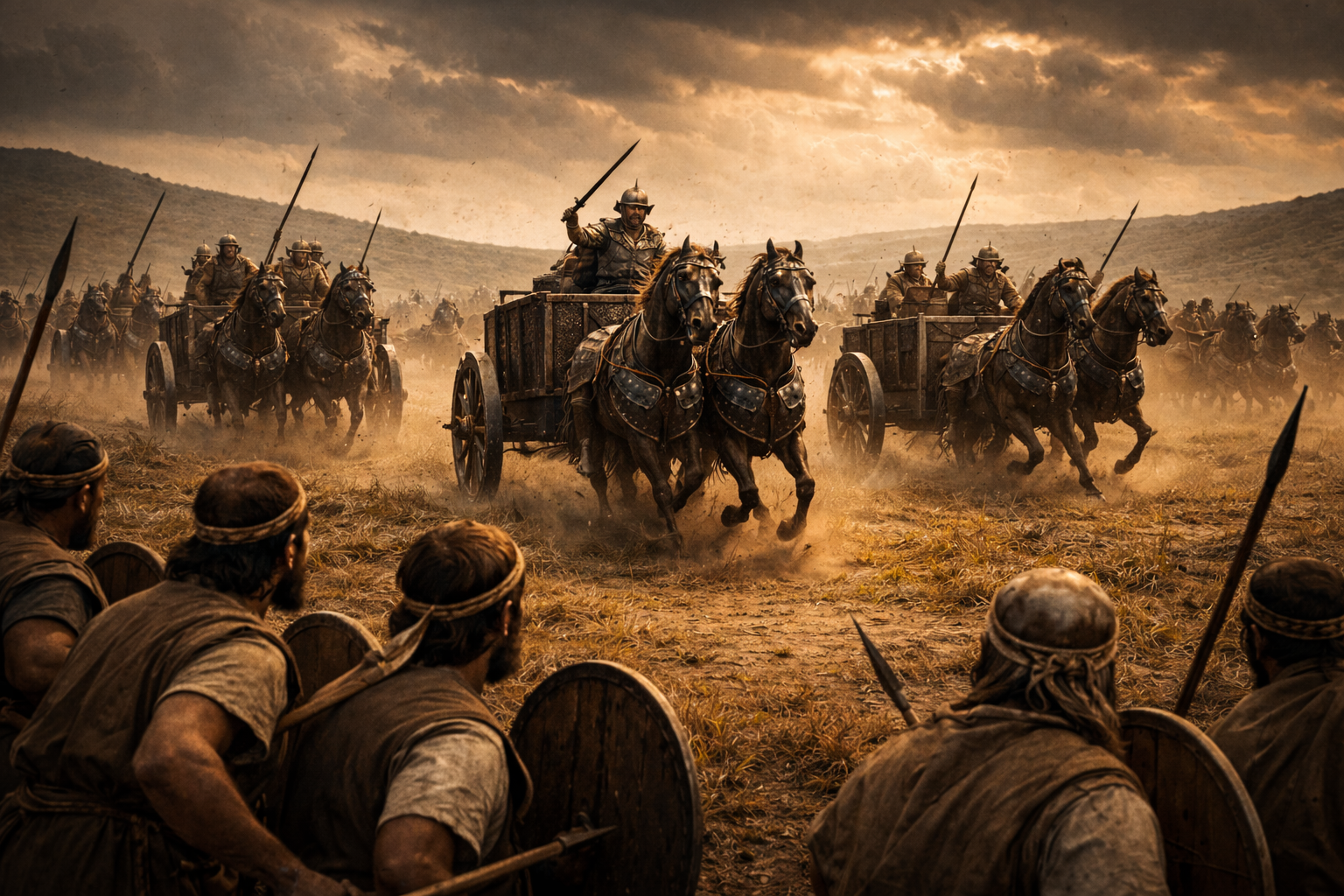
When God Is With Us, Yet the Battle Remains
“The LORD was with the men of Judah. They took possession of the hill country, but they were unable to drive the people from the plains, because they had chariots fitted with iron.”
Judges 1:19
This is a strange verse.
The LORD was with Judah. The text says that plainly. Judah took possession of the hill country because God was with them. Then they reached the plains, where the enemy had iron chariots, and suddenly the battle changed. What worked in the hills did not work here.
That unsettles us because we often assume God’s presence should mean victory comes quickly, cleanly and all at once. If God is with us, why is this still hard? Why does this part remain? Why does obedience bring us to a place where our strength runs out?
The verse says Judah could not drive them out. It does not say the LORD could not. The wording points to Judah’s limit, not God’s.
God’s presence does not turn His people into limitless creatures. He strengthens them. He leads them. He gives real victories. But He also brings them to places where they discover the edge of their own power. Sometimes faithfulness leads us straight to that edge.
Many readers try to smooth the verse over. Maybe Judah lacked faith. Maybe they failed to try hard enough. Maybe there was hidden disobedience behind the scene. Judges does become a book about compromise, so we should not pretend that warning is absent. Israel learns to tolerate what God told them to drive out, and that tolerance eventually becomes bondage.
But Judges 1:19 holds two facts together:
God was with Judah.
Judah could not do it.
That combination is uncomfortable. A remaining battle is not automatic proof that God has left. It may be the place where our limits are finally exposed.
Judges does not leave those limits harmless. The people Israel fails to drive out are eventually tolerated, managed, accommodated and woven into Israel’s life. What they cannot remove, they learn to live with. What they learn to live with, they eventually serve.
That is the slow danger in Judges. Rebellion does not always arrive as a sudden collapse. Sometimes it comes by making room for the thing, renaming it, explaining it and then waking up one day to find it feels normal.
Most Christians know something like this.
A person comes to faith and real change happens. Some sins fall away. Old habits break. Destructive patterns lose their grip. That is grace. Real grace. Then the terrain changes. Life settles into routine, pressure builds, fatigue creeps in and relationships strain. One area refuses to yield.
For many believers, that area is anger.
I do not mean only public rage, shouting or slammed doors. Sometimes anger is quieter than that: irritation with children, sharpness with a spouse, resentment at work, contempt in the mind or a short fuse when life feels out of control.
The person prays, repents, apologizes and resolves to do better. Then it comes back. God is still present. Faith is still real. Growth may be happening in other parts of life. But this remains.
Anger can function like an iron chariot because it is rarely just behavior. It protects something. It guards control: things must go my way. It guards justice: this is not fair. It guards identity: I must not be diminished. It guards fear: if I do not react, something bad will happen.
That is why anger has so much room to run when we are tired, embarrassed, interrupted or afraid. The terrain opens up and the chariots start moving.
Trying harder can restrain it for a while. Rules can help. Accountability can help. Apologies are necessary. None of that should be dismissed. But anger rarely dies because we got better at clenching our teeth.
At some point, the battle exposes the limit of self-effort. We are still trusting anger to protect us. We may hate it, but part of us still believes we need it.
When believers reach that place, two wrong turns are common. Some accommodate the stronghold. “That’s just how I am.” “I’m under pressure.” “Everyone has something.” So the sin stays, managed instead of confronted.
Others double down on self-control. More rules. More monitoring. More private pressure to keep everything contained. That may produce a cleaner exterior for a while, but it often leaves behind anxiety, rigidity or quiet pride. The land looks orderly. Freedom is thin.
The better path is deeper trust.
The prayer changes from “Lord, help me stop doing this” to something more searching: “Why do I still reach for this? What am I protecting? What am I afraid will happen if I do not react? Teach me to trust You here.”
That is where sanctification deepens. The remaining battle becomes the place where God exposes the false refuge underneath the sin.
Hebrews 3-4 looks back on Israel’s story and warns believers not to stop short of rest. Israel failed to enter rest because trust gave way to fear and unbelief. Biblical rest is settled dependence on God, the peace of trusting Him enough to obey.
Iron chariots mark the place where self-effort runs out and dependence has to grow. So if a battle remains, do not assume God is absent. He may be bringing you to the end of a strength that was never going to free you anyway.
The iron chariot is real. The limitation is real. The danger of accommodation is real too. But God is with His people even there.
And in time, as trust grows where self-reliance once ruled, even iron chariots fall.